The EU Entry/Exit System: What Actually Changed at Schengen Borders
EES replaced the passport stamp with a digital record. At a Schengen border you now give a facial image and fingerprints, and your entry and exit are logged instead of inked. The European Commission declared the system fully operational on 10 April 2026. There is nothing to apply for and no fee, but budget extra time for your first crossing.
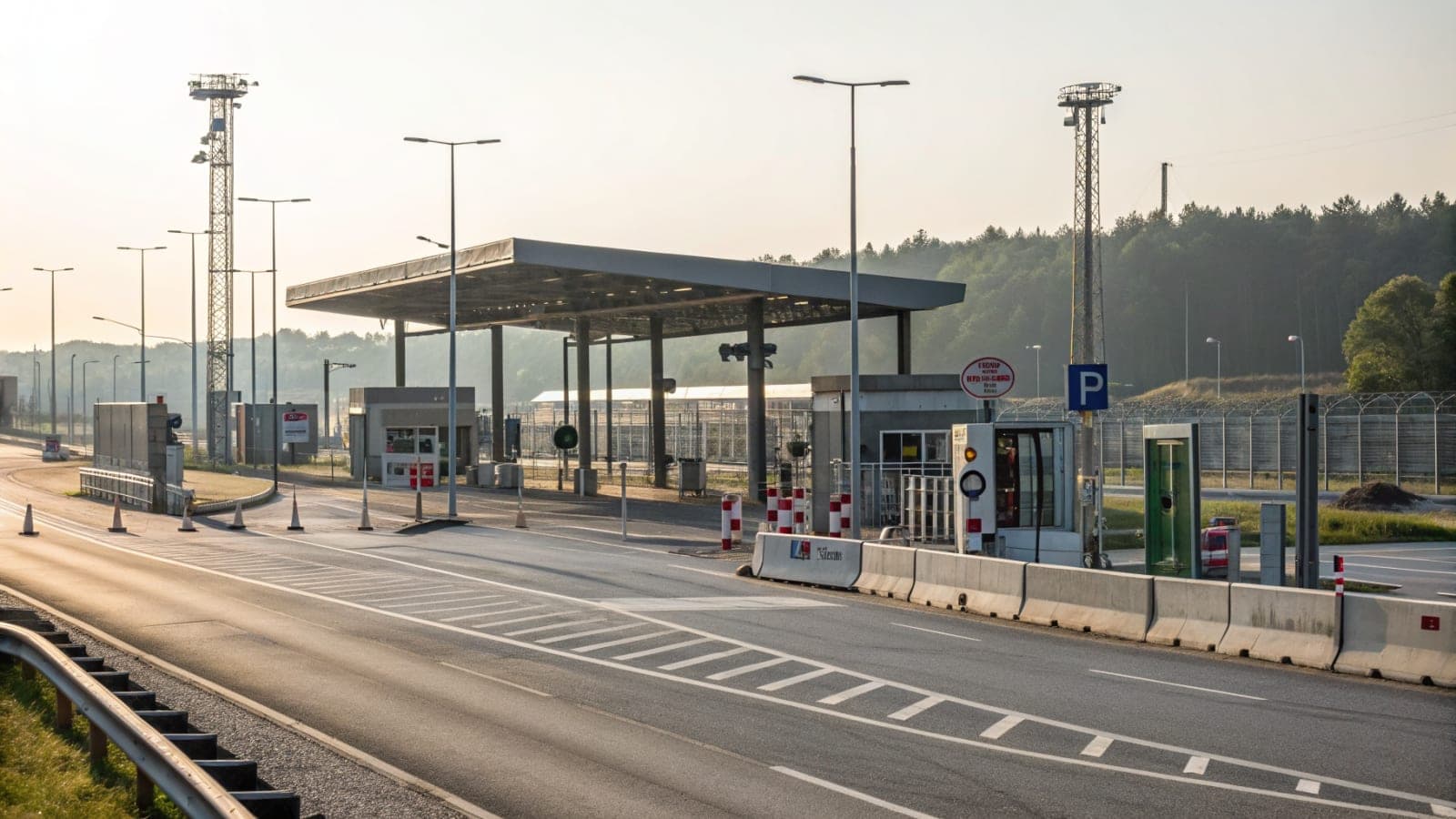
The Entry/Exit System swapped the ink stamp in your passport for a digital record of your face, your fingerprints and your dates. For a UAE resident flying to Europe, the change happens at the border desk, not before the trip: there is no form to fill in, nothing to pay and no app you have to download. What changed is how long your first crossing takes and how precisely your 90 days are now counted.
What is the EU Entry/Exit System, and what actually changed?
EES is a shared database that records every entry, exit and refusal of entry for non-EU nationals making a short stay in the Schengen area. Instead of an officer stamping your passport, your crossing is logged electronically along with a facial image and fingerprints, according to the European Commission's Entry/Exit System policy page.
The practical difference for you is threefold. Your first crossing after EES takes longer because the biometrics have to be enrolled. Your passport may come back without a stamp. And the clock on your short stay is now counted by a computer rather than by an officer squinting at faded ink.
The system went live with a progressive rollout on 12 October 2025 and the Commission announced it fully operational across all Schengen external borders on 10 April 2026. In that first phase alone the Commission reported more than 52 million entries and exits recorded and over 27,000 refusals of entry.
At a glance
| Item | Detail | Source |
|---|---|---|
| What it is | Digital record of entry, exit and refusal of entry, replacing the passport stamp for non-EU short stays | European Commission |
| Where it applies | External borders of the 29 European countries operating the system | European Commission |
| Key dates | Progressive rollout from 12 October 2025; declared fully operational 10 April 2026 | European Commission |
| What is collected | Facial image, fingerprints, passport data, date and place of entry and exit | European Commission |
| Advance registration | None. Nothing to apply for, nothing to pay | European Commission |
| How long data is kept | Three years after your last exit, five years where an overstay is recorded | EU official EES FAQ |
| Who is exempt | EU citizens, and holders of a Schengen long-stay visa or residence permit, among others | European Commission |
Do I need to register for EES before I fly from the UAE?
No. There is no EES application, no online portal and no fee for the traveller. The Commission is explicit that EES data is captured at the border on arrival, unlike a travel authorisation that must be approved before you board.
If a website asks you to pay to register for EES, it is not an official service. Nothing about the system is sold to travellers.
A handful of borders have trialled optional apps that let you pre-load passport details shortly before arrival, which can shave a minute off the desk. They are convenience tools offered by individual countries, not a requirement, and you should never assume one exists at your airport.
What you do still need is everything the visa file always asked for. A Schengen application is assessed on the documents you submit, including evidence of your transport arrangements, which is why applicants from Dubai and Sharjah so often pair the appointment with a flight reservation for a Schengen visa rather than buying a fare before a decision.
Need proof of a booked flight?
A PNR your consulate can look up, from AED 49, with no fare to write off if the answer is no.
What should I expect at the border desk?
Budget extra time for the first crossing after the system started recording you, especially at a big hub arriving in the evening when several long-haul flights land together.
Here is what to have ready:
- Your passport, the same one used for the visa, with the biometric page clean and unbent
- Your visa, if you hold one, either in the passport or as issued by the consulate
- Clean, dry hands for the fingerprint reader; hand cream and sanitiser are a common cause of failed scans
- Glasses off and headwear adjusted so the facial capture works on the first attempt
- Proof of your return or onward journey, which the officer may ask to see
- Your accommodation details for the stay, printed or on screen
- Travel insurance documents, since the medical cover is part of the Schengen file
- Patience for the queue, because enrolment adds time that a stamp never did
Children are treated differently from adults on fingerprints, and exempt categories such as long-stay visa and residence permit holders show their documents but are not enrolled, per the Commission's note on who is exempt.
Is the rollout finished, or is it still uneven?
Officially it is finished. The Commission stated on 10 April 2026 that the system was deployed across all Schengen external border crossing points, closing a 180-day implementation phase.
In practice, treat "fully operational" as the legal position rather than a promise about your lane. The rollout was built on a temporary derogation regulation that let countries phase in biometric functions and ease off during disruption, and the transition from that regime to steady running has not looked identical everywhere.
Travel reporting through 2026 has repeatedly described checks being applied inconsistently at different airports and land crossings, with some borders still catching up. We have not found an official EU statement confirming that picture country by country, so we will not present it as settled fact. What we can say honestly is this: your experience may be a full biometric enrolment, a quick facial check, or an old-fashioned stamp, and none of those means something has gone wrong.
Plan for the slowest version. Arrive early, keep your documents to hand and do not book a tight onward connection on the day you first enter.
How does EES change my 90 days in 180?
The short-stay rule itself has not changed. A visitor can spend up to 90 days in any 180-day period in the Schengen area, and that arithmetic predates EES.
What changed is enforcement. Entries and exits are now computed from a database rather than read off stamps, so a missing stamp no longer helps anyone and an overstay is far more visible. The official FAQ notes that records are kept for three years after your last exit, stretching to five years where an overstay is on file, as set out in the EU's official EES FAQ.
If you hold a UAE residence visa on an Indian, Pakistani, Filipino or Egyptian passport, nothing about EES changes whether you need a Schengen visa. It changes only how your crossings are recorded once you have one.
Is EES the same thing as ETIAS?
No, and the distinction matters for UAE residents. EES is the border record that applies to non-EU nationals at the crossing itself. ETIAS is a separate travel authorisation for visa-exempt nationalities that has to be approved before travel.
Its start date has moved more than once and, as of late September 2026, the EU has not confirmed a firm launch date. Anyone selling you an ETIAS today is selling something that does not yet exist.
Here is the part most readers on a UAE residence visa can file away: if your passport requires a Schengen visa, ETIAS is not your route. You apply for the visa, and EES records you at the border. Only visa-exempt nationalities will ever use ETIAS.
What goes wrong at EES borders, and how do I avoid it?
The failures we hear about are rarely dramatic. They are small, avoidable and they cost people their connection.
A missed connection. The most common problem is simply time. A first enrolment at a busy terminal can add a long wait, and travellers who booked a ninety-minute transfer lose it. Build a wide gap on the day you enter Schengen.
Failed fingerprint capture. Moisturiser, sanitiser, worn fingertips after manual work, or a cut can all defeat the reader. Wipe your hands before you reach the desk and expect to be asked to try again.
Arguing about a missing stamp. A digital record is the record now. Do not ask an officer to stamp your passport as proof of exit, and do not panic when your passport comes back unmarked.
Thin travel documentation. Border officers can still ask for the things your visa file contained: where you are staying, how you are leaving, and proof you can pay for the trip. A reservation under a live booking reference answers the second one cleanly, and it is the same document a consulate accepts in a Schengen visa application.
Assuming a reservation is a ticket. It is not, and nobody should present it as one. A held reservation is proof of a travel plan. If you actually intend to fly a segment, buy that segment. No document decides admission on its own; officers weigh your funds, your ties to the UAE and whether your story holds together.
Treating a stamp-free passport as an absent record. Some travellers have been caught out assuming that no stamp means no entry logged. The database logged it.
What does any of this cost?
EES itself costs the traveller nothing. The costs around a Schengen trip are the visa fee and whatever documents your file needs.
| Item | Cost | Notes |
|---|---|---|
| EES registration | Free | No application, no portal, captured at the border (European Commission) |
| Schengen short-stay visa fee, adult | EUR 90 | Set by the EU, paid at the consulate or visa centre (European Commission) |
| Schengen short-stay visa fee, child aged 6 to 12 | EUR 45 | Reduced rate (European Commission) |
| Flight reservation, 2 days valid | AED 49 per traveller | Our price, live PNR, delivered in 10 to 15 minutes |
| Flight reservation, 7 days valid | AED 69 per traveller | Our price, the usual choice for a visa appointment |
| Flight reservation, 14 days valid | AED 79 per traveller | Our price, for longer processing windows |
| Travel insurance | from AED 30 | Our price, AXA-issued, meeting the Schengen medical cover minimum |
Visa centre service charges are set by the centre handling your application and vary by country, so check the figure on your appointment confirmation rather than trusting a number from a blog.
What should a UAE resident do differently now?
Honestly, very little before the trip and a bit more on the day. Keep the file the consulate asks for, and give yourself room at the border.
Three habits cover almost everything. Arrive earlier than you used to. Keep your documents together rather than buried in a checked bag. And stop relying on stamps to prove where you have been, because the stamp may not be there.
Sources
- European Commission, Migration and Home Affairs: Entry/Exit System
- European Commission: Entry/Exit System (EES) is fully operational, 10 April 2026
- European Commission: The new Entry/Exit System went live on 12 October 2025
- European Commission: The Entry/Exit System is fully operational since 10 April 2026. Who is exempt?
- European Commission: Main differences between the EES and ETIAS
- European Union, Travel to Europe: FAQs about EES
- European Commission: Applying for a Schengen visa
Schengen appointment booked and the flight reservation still missing?
EES changed the border, not the file you hand in at the visa centre. We issue a real airline reservation under a live PNR, verifiable in Amadeus, Sabre and Travelport. Book a dummy ticket for your Schengen visa from AED 49 and it reaches your inbox in 10 to 15 minutes, any hour of the day.
Frequently Asked Questions
Written by
Ammar Afridi
Marketing Executive
Ammar Afridi has spent four years preparing travel and visa documentation for UAE residents, working on Schengen, UK, US and Canada files and handling more than 2,000 applications.
Dummy ticket for Schengen visa
From AED 49
A genuine held seat under a live PNR, emailed to you in 10 to 15 minutes.
Get your ticketSchengen travel insurance
From AED 30
Genuine AXA cover that clears the Schengen medical minimum, issued the same day.
Get insured